
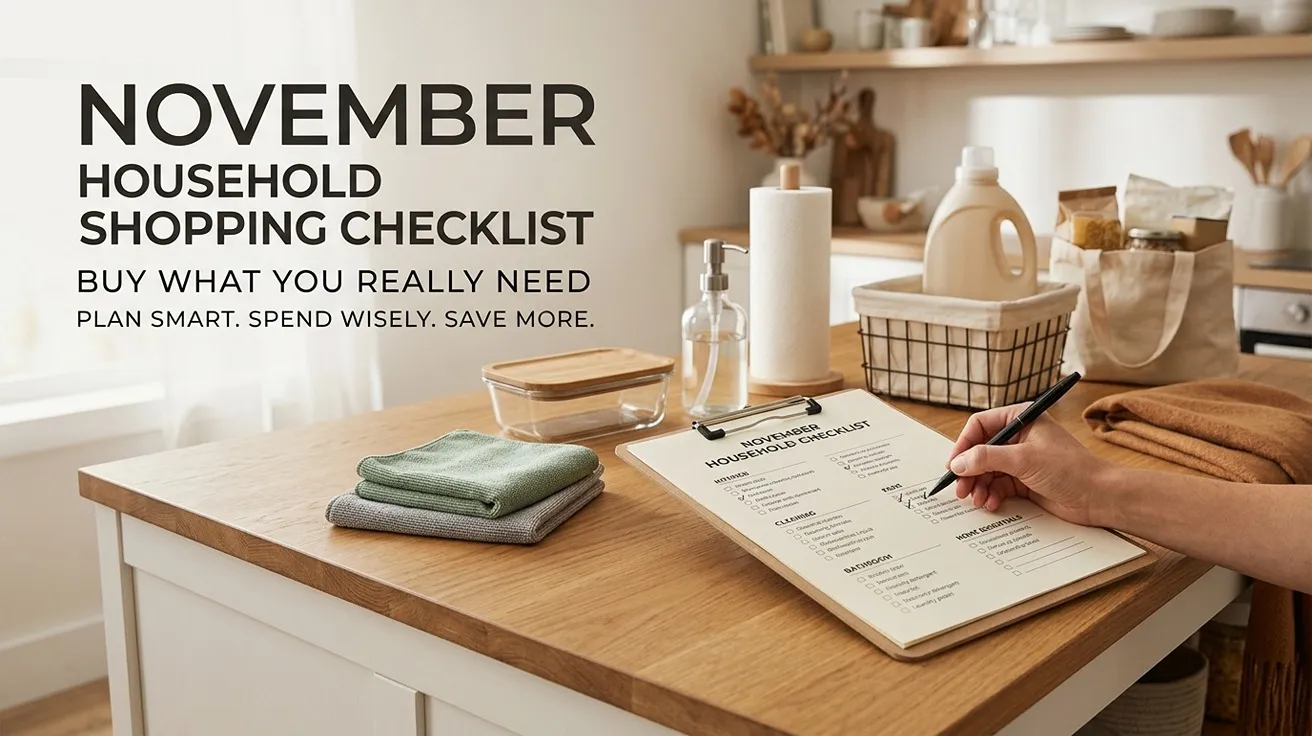
November is an important month for household shopping. As
the weather changes and major seasonal sales approach, many families start
purchasing cleaning products, kitchen supplies, home essentials, storage items,
and other everyday necessities. Retailers often advertise attractive November
discounts, Black Friday promotions, and early holiday offers, making it
tempting to add more products to your shopping cart.
However, buying something simply because it is on sale does
not always mean you are saving money. A low-priced product can still be an
unnecessary expense if you already have enough at home or do not need it. The
smarter approach is to plan your household shopping before browsing online
stores or visiting supermarkets.
A well-organized November household shopping checklist can
help you identify what needs replacing, avoid duplicate purchases, and spend
your budget on useful products. Whether you are preparing your home for winter,
restocking everyday supplies, or getting ready for the holiday season, planning
ahead can make shopping easier and more affordable.
This guide explains how to create a practical household
shopping checklist, prioritize essential purchases, find genuine discounts, and
avoid common shopping mistakes.
Why You Need a Household Shopping Checklist in November
Household expenses can increase during November because
families often prepare for colder weather and upcoming celebrations. Items such
as cleaning supplies, warm bedding, kitchen essentials, toiletries, and food
storage products may become more important during this period.
Without a shopping plan, it is easy to purchase things you
do not really need. Attractive promotions, limited-time discounts, and seasonal
advertising can encourage unnecessary spending.
A household checklist gives every purchase a clear purpose.
Instead of buying products randomly, you can review what you already own,
identify missing items, and decide which purchases should come first.
It also helps you:
- Avoid
buying duplicate household products.
- Keep
monthly spending under control.
- Focus
on essential items before optional purchases.
- Compare
prices across different retailers.
- Take
advantage of genuine November discounts.
- Prepare
your home for winter and the holiday season.
The goal is not to stop shopping. It is to make every
purchase more useful and ensure your money goes towards things that improve
your home and everyday routine.
1. Start by Checking What You Already Have
Before making a shopping list, take some time to check your
cupboards, kitchen cabinets, storage spaces, and cleaning areas. You may
already have enough supplies to last several weeks.
For example, you might discover unopened cleaning products,
extra paper towels, spare light bulbs, or several packets of kitchen essentials
hidden at the back of a cabinet.
Checking your existing supplies helps prevent unnecessary
purchases.
Review Your Kitchen Supplies
Start with your kitchen because it contains many frequently
used household products. Check cooking oil, spices, food storage bags,
aluminium foil, baking paper, dishwashing liquid, sponges, and other everyday
supplies.
Look at expiry dates on packaged food and replace only the
items that are running low or no longer suitable for use.
Check Cleaning and Laundry Products
Review your supply of laundry detergent, fabric conditioner,
surface cleaners, disinfectants, toilet cleaners, and washing accessories.
If you already have several bottles of a particular product,
there may be no reason to buy more simply because it is discounted.
Inspect Bathroom and Personal Care Essentials
Check toilet paper, tissues, hand soap, toothpaste, shampoo,
and other regularly used products. Add items to your list when they are running
low rather than purchasing everything at once.
This simple review can reduce duplicate purchases and help
you understand your actual household needs.
2. Create a Kitchen Essentials Checklist
The kitchen is one of the busiest areas of any home, so
keeping it organized can make everyday tasks easier. November is a good time to
replace worn-out kitchen items and restock essential supplies before the busy
holiday period.
Your kitchen shopping checklist might include:
- Dishwashing
liquid and dishwasher tablets.
- Cleaning
sponges and kitchen cloths.
- Food
storage containers.
- Aluminium
foil and baking paper.
- Food
storage bags.
- Kitchen
towels and paper towels.
- Cooking
utensils that need replacing.
- Frequently
used pantry ingredients.
You do not need to purchase everything on this list. Only
include products that are missing, damaged, or nearly finished.
Replace Damaged Kitchen Tools
Check your cooking utensils, chopping boards, measuring
cups, and food containers. Replace items that are cracked, damaged, or
difficult to clean.
If a product still works properly, keep using it. Buying new
kitchen accessories simply because they look attractive can increase household
expenses without providing much additional value.
Look for Practical Kitchen Deals
November promotions may include discounts on cookware,
storage containers, small appliances, and kitchen accessories.
Before purchasing an appliance, consider how often you will
use it and whether it solves a real problem. A discounted kitchen gadget is not
a good investment if it will remain unused in a cupboard.
3. Restock Cleaning and Laundry Essentials
Cleaning products are regular household expenses, which
makes them an important part of your November shopping checklist.
Check your current supplies and create a list of products
that you use frequently. This may include laundry detergent, washing-up liquid,
bathroom cleaner, multipurpose spray, floor cleaner, sponges, microfiber
cloths, and rubbish bags.
Choose Products That Match Your Needs
You do not need a different cleaning product for every
surface. A few suitable multipurpose products may be enough for many everyday
cleaning tasks.
However, always follow product labels and avoid mixing
cleaning chemicals. Some combinations can produce dangerous fumes.
Compare Different Pack Sizes
Larger cleaning product packages sometimes offer better
value per unit, but they are not always the cheapest option.
Compare the price per litre, kilogram, or individual item
rather than focusing only on the total package price.
Also consider storage space and how quickly your household
uses the product. Buying a large quantity is not helpful if you cannot store it
properly or will not use it before its recommended expiry period.
4. Prepare Your Home for Colder Weather
November is a useful time to check whether your home needs
additional seasonal supplies. Depending on your local climate, you may need
warmer bedding, blankets, draft protection, or small home maintenance products.
Start by checking the condition of items you already own.
Bedding and Warm Accessories
Inspect blankets, comforters, bedsheets, pillow covers, and
mattress protectors. If something is damaged or no longer comfortable, consider
replacing it.
Look for materials that are comfortable, easy to maintain,
and suitable for your climate.
Home Comfort Products
You may also need items such as door draft stoppers, warmer
curtains, reusable hot water bottles, or additional lighting.
Before buying heating equipment, check safety instructions,
energy requirements, and the suitability of the product for your living space.
Do not purchase seasonal home products simply because they
are included in a November sale. Focus on items that will make your home more
comfortable or solve a genuine problem.
5. Check Bathroom and Laundry Room Essentials
Bathrooms and laundry rooms contain many products that
families use regularly. Running out of basic supplies can create unnecessary
inconvenience, so it is useful to review these areas before completing your
November shopping.
For the bathroom, check toilet paper, handwash, soap,
toothpaste, bathroom cleaning products, tissues, and replacement accessories.
For the laundry area, inspect detergent, stain removers,
washing machine cleaning products, drying accessories, and laundry baskets.
Replace Only What Needs Attention
Look for damaged shower curtains, worn bath mats, broken
storage containers, and faulty laundry accessories.
If an item can be cleaned, repaired, or reused safely, there
may be no need to replace it.
This approach helps you avoid spending money on products
that still have plenty of useful life remaining.
6. Review Lighting and Small Home Maintenance Items
Small household problems can become more inconvenient when
ignored. November is a good time to check basic home maintenance supplies and
replace items that are no longer working properly.
Walk through each room and look for products that need
attention.
Your checklist may include:
- Replacement
light bulbs.
- Batteries
for essential household devices.
- Basic
tool supplies.
- Door
and drawer hardware.
- Extension
cords with suitable safety ratings.
- Air
filters, where applicable.
- Smoke
alarm batteries, if required by the device.
Check the specifications before buying electrical products,
batteries, or replacement parts. Compatibility and safety should always come
before price.
You should also inspect safety equipment and follow the
manufacturer's replacement guidance rather than waiting until something stops
working.
7. Make a Family Grocery and Pantry Checklist
Household shopping is not limited to cleaning and home
accessories. Food and pantry supplies are also important parts of the monthly
budget.
Before visiting a supermarket or ordering groceries online,
review your meal plans and check your pantry.
Create a list based on the meals your family regularly
prepares. This can help you avoid buying ingredients that are unlikely to be
used.
Focus on Frequently Used Ingredients
Depending on your household's preferences, your grocery
checklist may include rice, pasta, flour, cooking oil, canned goods, breakfast
items, tea, coffee, spices, and other regularly used ingredients.
Compare prices between different package sizes and
retailers. Also check expiry dates, storage requirements, and the amount your
family can realistically consume.
Avoid Buying Food Just Because It Is Discounted
Food promotions can be useful, but buying more than you can
consume may lead to waste.
Only purchase discounted products when you have a clear plan
to use them. If an item needs refrigeration or freezing, make sure you have
enough space to store it safely.
8. Include Storage and Organization Products Only When Necessary
November shopping promotions often feature storage boxes,
drawer organizers, baskets, shelving accessories, and wardrobe organizers.
These products can help improve your home's organization,
but buying them without a plan can create even more clutter.
Start by identifying a specific area that needs improvement.
For example, you might need containers for kitchen
ingredients, organizers for cleaning supplies, or storage boxes for seasonal
clothing.
Measure Before You Buy
Check the available space before ordering storage products.
Measure shelves, cupboards, drawers, and other areas where the products will be
placed.
Pay attention to dimensions, materials, weight limits, and
assembly requirements.
A storage product is only useful if it fits your space and
serves a clear purpose.
9. Set a Realistic November Household Shopping Budget
A checklist becomes much more effective when you combine it
with a clear spending limit.
Decide how much money you can comfortably allocate to
household purchases during November. Then divide your budget according to your
most important needs.
For example, you could organize your spending into three
simple categories:
Essential purchases: Items that are nearly finished,
broken, or necessary for daily household activities.
Useful replacements: Products that would improve
convenience but do not require immediate replacement.
Optional purchases: Decorative items, extra
accessories, and non-essential upgrades.
Prioritize essential purchases first. If your budget is
limited, postpone optional products until you have covered the items that
matter most.
Keep track of your purchases as you shop. This makes it
easier to see how much of your budget remains and prevents small expenses from
adding up unexpectedly.
10. How to Find Genuine November Household Shopping Discounts
November is known for major shopping promotions, including
Black Friday and early holiday sales. These events can provide opportunities to
save on useful household products, but it is important to compare offers
carefully.
Compare Prices Across Retailers
Search for the same product on different shopping websites.
Compare the current price, delivery charges, product specifications, and return
policies.
A product with a smaller advertised discount may still be
cheaper than one with a larger promotional percentage.
Check Available Coupon Codes
Before completing an online order, look for valid coupon
codes that apply to the products in your basket.
Some retailers offer additional savings through promotional
codes, first-order discounts, or category-specific offers.
Read the terms and conditions because certain codes may
require a minimum purchase or may exclude selected products.
Consider Cashback and Loyalty Rewards
Some retailers and shopping platforms provide cashback or
loyalty rewards on eligible purchases.
If you already use a rewards programme, check whether your
household shopping qualifies for additional benefits.
Remember to compare the final price rather than focusing
only on the cashback amount. A higher-priced product is not necessarily a
better deal just because it offers rewards.
Check Delivery and Return Conditions
A discounted product may become less attractive when
delivery costs are added.
Before ordering, review the complete checkout total and
confirm whether returns are accepted. This is particularly important for
appliances, furniture accessories, and products with different sizes or
specifications.
11. Common Household Shopping Mistakes to Avoid
Even a carefully planned shopping trip can become expensive
if you overlook a few important details.
One common mistake is purchasing products because they are
advertised as limited-time offers. A countdown or promotional message should
not pressure you into buying something you do not need.
Another mistake is buying too many bulk products. Large
packages may look economical, but they can waste money if your household does
not use them quickly enough.
Ignoring product quality is another problem. Cheap household
products may need replacing sooner, making them more expensive in the long run.
Read customer reviews and check materials, specifications, and warranty details
where applicable.
Some shoppers also forget to compare delivery charges.
Always review the final checkout amount before confirming an order.
Finally, avoid shopping without checking your existing
supplies. A quick cupboard inspection can prevent you from buying products you
already have.
12. A Simple November Household Shopping Checklist
Use this practical checklist when reviewing your home.
Select only the items that genuinely need attention.
Kitchen
Dishwashing liquid and cleaning sponges
Food storage containers
Kitchen towels and rubbish bags
Baking paper and aluminium foil
Damaged cooking utensils
Cleaning and laundry
Laundry detergent
Multipurpose cleaning products
Bathroom cleaner
Microfiber cloths and sponges
Laundry accessories
Bathroom and personal care
Toilet paper and tissues
Hand soap and toothpaste
Shampoo and other regularly used essentials
Replacement bath accessories
Home and maintenance
Bedding and blankets
Replacement light bulbs
Batteries for essential devices
Basic maintenance supplies
Necessary storage products
Shopping and savings
Check existing household supplies
Set a monthly shopping budget
Compare prices across retailers
Check valid promotional codes
Review delivery charges and return policies
This checklist is a starting point, not a list of products
you must purchase. Remove anything you already have and add items that are
specific to your household.
Final Thoughts
A November household shopping checklist can help you prepare
for the colder months, organize your home, and manage everyday expenses without
unnecessary purchases. The most effective way to save money is to understand
what your household actually needs, check existing supplies, set a realistic
budget, and compare prices before buying. Take advantage of genuine November
promotions, but never let a discount convince you to purchase something that
will go unused. Focus on practical products, useful replacements, and
essentials that support your daily routine. For more ways to discover online
discounts, promotional codes, and smarter shopping opportunities, visit SavingInstrument
and make your household shopping budget work harder.