
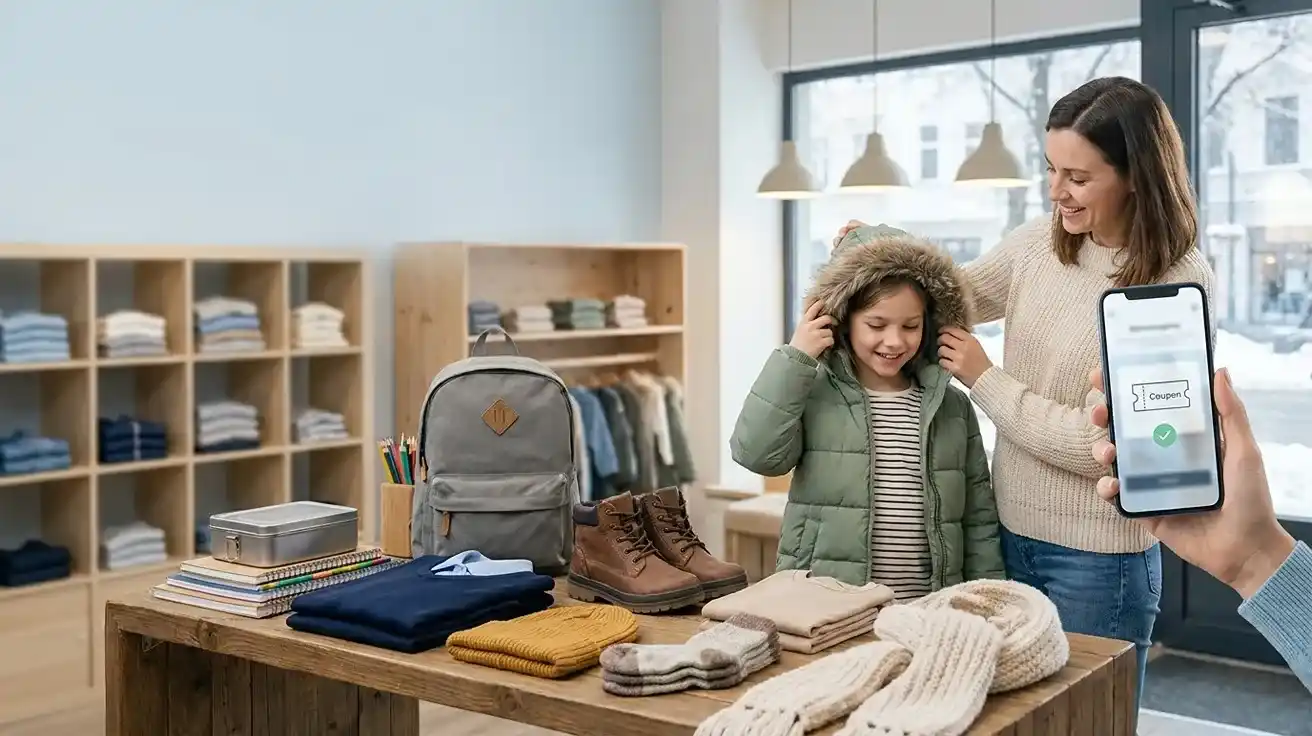
Winter can be an expensive season for families, especially
when children need warm clothes, school supplies, shoes, and everyday
essentials. As temperatures drop, parents often have to replace lightweight
outfits with winter jackets, sweaters, coats, boots, socks, and other
cold-weather items. At the same time, school expenses continue, including
stationery, backpacks, lunch boxes, and classroom supplies.
Buying everything at once can put pressure on the family
budget. Children also grow quickly, which means clothes and shoes purchased one
winter may not fit the following year. The good news is that you do not need to
spend a fortune to keep your children warm, comfortable, and prepared for
school.
With a little planning, smart shopping, and careful use of
discounts, you can find quality products at affordable prices. This guide
shares practical ways to save money on children's winter clothing and school
essentials without sacrificing comfort, quality, or usefulness.
1. Make a Shopping List Before You Buy
One of the easiest ways to control winter shopping costs is
to prepare a list before visiting stores or browsing online.
When parents shop without a plan, it is easy to buy
duplicate items, attractive outfits that children rarely wear, or unnecessary school
accessories. A shopping list helps you focus on what your children actually
need.
Start by checking their existing wardrobes and school
supplies. Separate items that still fit from those that need replacing. Look
for warm clothes, shoes, stationery, bags, and lunch accessories that are still
in good condition.
Your list might include:
- Winter
jackets and coats
- Sweaters,
hoodies, and cardigans
- Thermal
tops and leggings
- Warm
trousers and everyday outfits
- Socks,
gloves, scarves, and hats
- Winter
shoes or waterproof boots
- School
uniforms and extra layers
- Notebooks,
pens, pencils, and folders
- Backpacks
and lunch boxes
After preparing the list, divide it into essential and
optional purchases. Buy the most important items first and leave non-essential
products until you find a suitable deal.
2. Set a Realistic Winter Shopping Budget
A shopping budget helps you decide how much you can
comfortably spend on clothing and school essentials.
Before buying anything, estimate the total cost of the items
your children need. You can divide your budget into categories such as winter
clothing, footwear, school uniforms, stationery, and accessories.
For example, if your budget is limited, prioritise a warm
jacket, comfortable everyday shoes, and essential school supplies before buying
extra outfits or decorative accessories.
It is also helpful to leave a small amount for unexpected
expenses. Children may outgrow their shoes, lose school supplies, or need an
additional warm layer during the season.
Keep track of your purchases as you shop. This makes it
easier to see how much money remains and prevents small expenses from adding up
unnoticed.
3. Choose Versatile Winter Clothing
Buying separate outfits for every occasion can quickly
increase your expenses. Instead, choose versatile winter clothing that children
can wear in different combinations.
Basic colours and simple designs are often easier to mix and
match. A few sweaters, trousers, jackets, and comfortable tops can create
several everyday outfits without requiring a large wardrobe.
Look for items such as:
- Neutral-coloured
sweaters that match different trousers.
- Warm
hoodies that work for school and weekends.
- Comfortable
jackets suitable for everyday activities.
- Plain
thermal tops that can be worn under uniforms.
- Durable
trousers that match several tops.
Layering is another practical way to manage winter clothing.
Children can wear a thermal top, regular shirt, sweater, and jacket depending
on the weather. This allows you to adjust their clothing throughout the day
without purchasing too many heavy outfits.
Choose practical pieces that are comfortable, easy to wash,
and suitable for your child's daily routine.
4. Shop During Seasonal Sales and Clearance Events
Timing can make a big difference when buying children's
winter clothing. Many retailers offer seasonal sales, clearance promotions, and
special discounts when they need to make room for new collections.
These sales can be useful for finding jackets, sweaters,
boots, thermal clothing, and school essentials at reduced prices.
Keep an eye on:
- End-of-season
winter clearance sales.
- Holiday
shopping promotions.
- New
Year sales.
- Back-to-school
discounts.
- Retailer
anniversary offers.
- Online
seasonal clearance events.
However, do not assume that every sale price represents the
best deal. Compare the original and current prices, check product quality, and
consider whether the item is genuinely useful.
Buying winter essentials towards the end of the season can also
help you prepare for the following year. Just remember that children may grow,
so avoid purchasing too many sizes in advance.
5. Use Discount Codes and Coupons
Online discount codes can help reduce the cost of children's
clothing, shoes, school supplies, and other everyday products.
Before completing an online order, check whether the
retailer offers a promotional code. Some stores provide discounts for new customers,
newsletter subscribers, seasonal shopping events, or purchases above a minimum
amount.
For example, a clothing retailer may offer a percentage
discount on selected winter jackets, while a stationery store may provide
savings on school supply bundles.
Follow these steps when using coupons:
1.
Find a suitable discount code from a reliable
coupon website.
2.
Read the offer conditions and expiration date.
3.
Check whether the code applies to your selected
products.
4.
Enter it in the retailer's checkout discount
field.
5.
Confirm that the final order total has been
reduced.
Always compare the final price after applying a code. A
different retailer may offer a better price without requiring a coupon.
6. Buy Quality Basics Instead of Chasing Cheap Prices
Saving money does not always mean choosing the lowest-priced
product. Very cheap clothing may wear out quickly, lose its shape after
washing, or become uncomfortable after regular use.
For children's winter clothing, look for materials that
provide warmth, comfort, and reasonable durability.
Pay attention to:
- Fabric
softness and comfort.
- Strong
stitching around seams.
- Easy-to-use
zippers and buttons.
- Wash-care
instructions.
- Comfortable
linings.
- Suitable
thickness for the local winter weather.
You do not need expensive designer clothing to get good
quality. Many affordable retailers offer practical winter basics at reasonable
prices.
Think about how frequently your child will wear an item. A
durable jacket used throughout the winter may offer better value than several
low-quality jackets that need replacing.
7. Buy Children's Clothing in the Right Size
Children grow quickly, so choosing the correct clothing size
is important.
Buying clothes that are too small can make children
uncomfortable, while purchasing items that are much too large may affect
movement and everyday activities.
Before ordering online, check the retailer's size guide.
Measure your child's height and, where needed, chest, waist, and foot length.
Do not rely only on age-based labels because sizing can differ between brands.
For some winter items, a little extra room can be useful. A
sweater or jacket with a comfortable fit may allow a child to wear another
layer underneath. However, shoes should fit properly and provide enough room
for natural movement.
Always review the return and exchange policy before
ordering. This is especially important when buying clothing from an unfamiliar
online store.
8. Save Money on School Uniforms
School uniforms can become a regular expense, particularly
when children need replacements during the winter months.
Instead of purchasing a completely new uniform every season,
check which existing pieces still fit and remain in good condition.
You can save money by:
- Replacing
only worn-out or undersized items.
- Buying
basic uniform pieces in multipacks.
- Comparing
prices from different retailers.
- Looking
for school-approved second-hand uniforms.
- Choosing
durable fabrics that are easy to wash.
- Buying
additional items when suitable discounts appear.
If your school has specific uniform rules, review them
before purchasing anything. Some schools require particular colours, styles, or
suppliers.
You can also ask other parents whether the school organises
uniform exchanges or second-hand sales. These options may help families find
affordable clothing while keeping usable items in circulation.
9. Find Affordable School Supplies
Winter shopping is not only about clothing. Children still
need notebooks, pencils, pens, folders, erasers, rulers, and other school
supplies.
The cost of stationery can increase when every item is
purchased separately. A better approach is to prepare a list based on the
school's requirements.
Check existing supplies first. Many children already have
unused notebooks, rulers, pencil cases, or folders from the previous school
term.
To reduce school supply costs:
- Buy
basic stationery in multipacks.
- Compare
prices between online and local stores.
- Choose
refillable pens where practical.
- Reuse
folders and pencil cases in good condition.
- Avoid
paying extra for unnecessary character designs.
- Purchase
only the quantities your child needs.
Buying stationery bundles can sometimes provide better
value, but compare the contents with your actual list. A large bundle is not a
saving if it contains items your child will never use.
10. Consider Second-Hand and Pre-Loved Clothing
Second-hand clothing can be a useful way to save money,
especially for items children may outgrow quickly.
Many families sell or exchange gently used jackets,
sweaters, coats, boots, and school uniforms. These products may still have
plenty of useful life remaining.
You can explore:
- Local
parent groups.
- Community
clothing exchanges.
- Charity
shops.
- Online
resale marketplaces.
- School
uniform exchange programmes.
- Friends
and family who have older children.
Before buying, check the condition carefully. Look for
damaged zippers, loose stitching, worn soles, stains, and missing buttons.
For winter footwear, pay special attention to fit, comfort,
and sole condition. Shoes that are badly worn may not provide the support or
protection your child needs.
Wash pre-loved clothing according to its care instructions
before your child wears it.
11. Save on Winter Shoes and Accessories
Winter shoes and accessories are important because children
need protection from cold, wet, and changing weather conditions.
However, buying separate accessories for every outfit is
rarely necessary. Focus on practical items that can be used regularly.
Depending on your local weather, useful essentials may
include:
- Warm
everyday shoes.
- Waterproof
boots for wet conditions.
- Comfortable
winter socks.
- Gloves
and scarves.
- Warm
hats or caps.
- Thermal
layers for colder days.
Look for multipacks of socks and basic accessories, as these
can sometimes offer better value than buying individual items.
When choosing footwear, prioritise a comfortable fit,
suitable grip, and durable construction. A low price is not worthwhile if the
shoes become uncomfortable or wear out quickly.
12. Compare Prices Before Completing Your Purchase
Price comparison is one of the simplest ways to avoid
overspending.
The same jacket, school bag, or pair of shoes may be
available at different prices across multiple retailers. Before placing an
order, compare the product specifications, delivery costs, return policies, and
available promotions.
Remember to compare the total cost rather than looking only
at the advertised price.
For example, one retailer may offer a lower product price
but charge more for delivery. Another may provide a slightly higher price with
free shipping or an additional discount code.
Check whether the retailer offers a price-match policy. Some
stores may match a competitor's price when the product and conditions meet
their requirements.
A few minutes of comparison can help you find better value
without compromising on quality.
13. Take Care of Winter Clothing to Make It Last Longer
Another effective way to save money is to take proper care
of the clothes you already own.
Children's jackets, sweaters, shoes, and uniforms can last
longer when they are cleaned, stored, and maintained correctly.
Read washing instructions before cleaning winter clothing.
Some fabrics require gentle washing or special care. Avoid using excessive heat
on items that may shrink or become damaged.
You can also teach children simple habits, such as hanging
jackets after school, keeping shoes dry, and storing gloves and scarves in a
specific place.
At the end of winter, clean suitable items and store them in
a dry, organised space. Before the next cold season, check whether they still
fit and are in good condition.
Taking care of existing clothing reduces the need for
unnecessary replacements.
14. Avoid Common Winter Shopping Mistakes
Even when good discounts are available, poor shopping
decisions can increase your total expenses.
Avoid these common mistakes:
Buying too many clothes: Children do not need a large
collection of winter outfits. Focus on practical pieces they can wear
regularly.
Ignoring existing supplies: Check wardrobes, drawers,
and school bags before buying replacements.
Shopping without a budget: Set a spending limit and
track your purchases.
Choosing price over quality: Extremely cheap items
may not last long enough to provide good value.
Ignoring return policies: Check exchange conditions
before ordering clothing and shoes online.
Buying unnecessary sale items: A discount is not a
saving if you do not need the product.
Waiting until the last minute: Last-minute shopping
can limit your choices and make it harder to compare prices.
Planning ahead gives you more time to find suitable products
and avoid rushed decisions.
Frequently Asked Questions
How can I save money on children's winter clothing?
Prepare a shopping list, set a budget, compare prices, and
look for seasonal clearance sales. Choose versatile clothing, use suitable
discount codes, and consider good-quality second-hand items.
What winter clothes should children have?
Most children benefit from comfortable winter layers,
including sweaters, jackets, warm trousers, suitable shoes, socks, and
weather-appropriate accessories. The exact items depend on the local climate
and your child's daily activities.
Is it cheaper to buy children's winter clothes online?
Online shopping can offer competitive prices, coupon codes,
and seasonal promotions. However, compare delivery costs, sizing information,
and return policies before ordering.
How can parents save money on school essentials?
Check existing supplies, prepare a list of required items,
buy useful multipacks, reuse suitable stationery, and compare prices across
different retailers.
Are second-hand winter clothes a good option?
Yes. Gently used clothing can provide good value when it is
clean, comfortable, and in suitable condition. Always inspect the fabric,
stitching, zippers, and footwear before purchasing.
When is the best time to buy winter clothing for
children?
Seasonal sales and end-of-winter clearance events can offer
useful discounts. Shopping early can also help you compare prices and avoid
last-minute purchases.
Final Thoughts
Keeping children warm and prepared for school during winter
does not have to mean spending more than your family budget allows. By making a
shopping list, comparing prices, choosing versatile clothing, checking seasonal
sales, and using suitable discount codes, you can find practical essentials at
better prices. Remember to focus on comfort, durability, and genuine value
rather than buying products simply because they are on sale. A little planning
can make winter shopping easier and more affordable while helping your children
stay comfortable throughout the season. For more ideas on finding online
discounts, promotional codes, and everyday savings, visit SavingInstrument and make
smarter shopping choices for your family.