
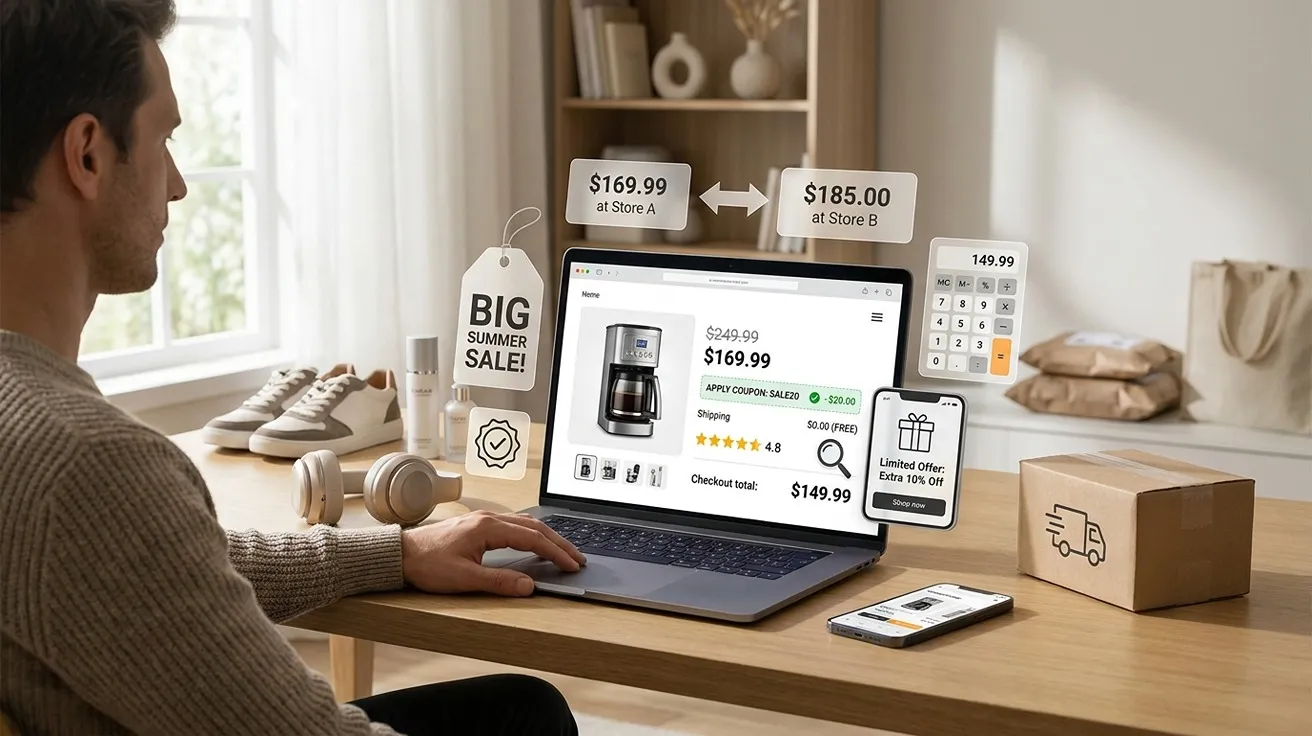
Online shopping is full of discounts, sales, promo codes,
and special offers. Almost every day, shoppers see messages such as
“Limited-Time Deal,” “Huge Savings,” or “50% Off.” These offers can look
exciting, but not every deal is actually a good deal.
A discount does not always mean you are saving money.
Sometimes the original price may be higher than usual, shipping costs may
reduce the savings, or the same product may be available for less somewhere
else. Learning how to check a deal properly can help you avoid unnecessary
spending and make smarter shopping decisions.
Here are some simple ways to tell whether an online deal is
really worth your money.
Compare the Price With Other Stores
One of the first things to do when you see a deal is compare
the price. Do not immediately assume that the advertised discount is the lowest
available price.
Search for the same product on a few other websites. You may
discover that another retailer offers the product at a lower price without a
large discount label.
Price comparison is especially useful for electronics,
clothing, home products, beauty items, and other products that are commonly
sold by multiple retailers.
Check the Original Price
A product showing “40% off” may sound impressive, but the
percentage itself does not tell you whether the deal is good.
Look at the current selling price and compare it with the
usual price of the product. Sometimes retailers advertise discounts from a
higher reference price, while the product may regularly sell for less.
Instead of focusing only on the percentage saved, focus on
the actual amount you will pay.
Search for an Extra Coupon
Even when a product is already on sale, there may be an
additional coupon or promo code available.
Before checking out, search for relevant coupons and deals.
You might find a percentage discount, fixed amount off, free shipping, or
another promotion that can reduce your final cost.
A sale combined with an eligible coupon can sometimes
provide much better value than the advertised deal alone.
Look at the Final Price
Always check the total amount before completing your
purchase. The price shown on a product page may not be the final amount you
pay.
Shipping charges, taxes, service fees, or other costs can increase
your total. A product that appears to be a great bargain may become less
attractive once these costs are included.
The final checkout total is the number that really matters.
Check the Product Quality
A low price is not useful if the product does not meet your
needs. Before buying, check product details, materials, specifications, size
information, and other important features.
For expensive products, it can also be helpful to read
customer reviews and look at ratings. A slightly more expensive product with
better quality may provide greater value over time.
A good deal should offer a reasonable balance between price
and quality.
Read the Deal Terms
Some offers have conditions that are easy to miss. A coupon
may require a minimum purchase, apply only to selected products, or be
available only for a limited time.
Other deals may exclude sale items or certain brands. Free
shipping may also require you to reach a particular order value.
Always read the important terms before assuming an offer
will work for your purchase.
Check Shipping Costs
Shipping can change whether an online deal is actually worth
it. A product discounted by a significant amount may not be a great bargain if
expensive delivery charges are added.
Look for free-shipping offers or coupons that reduce
delivery costs. When comparing two retailers, always compare the complete
price, including shipping.
Avoid Buying Something Just Because It Is on Sale
One of the biggest shopping mistakes is buying something
simply because the price is lower.
Ask yourself whether you actually need the product. If you
would not have considered buying it before seeing the discount, the deal may
not really be saving you money.
A genuine saving happens when you spend less on something
you actually wanted or needed.
Consider the Timing
Some deals are worth taking immediately, while others may be
available again later. If you are not in a hurry, consider checking whether the
product regularly goes on sale.
Seasonal promotions, clearance events, holiday sales, and special
shopping periods can sometimes provide better prices.
Waiting can be useful, but do not delay an essential
purchase forever just because you hope for a slightly better discount.
Use Coupon and Deals Websites
Finding a good deal can take time when you have to check
several stores and search for different coupons. Coupon and deals websites can
make this process easier by bringing available offers together.
Before purchasing, check for current coupons, discounts, and
promotions related to the store or product you want. This gives you another
opportunity to reduce your final cost.
Think About Value, Not Just the Discount
The best deal is not necessarily the one with the biggest
percentage. A good deal combines a reasonable price, useful product, good quality,
manageable shipping costs, and suitable terms.
For example, a smaller discount on a product you genuinely
need may be more valuable than a huge discount on something you do not need.
Always think about the total value before making your
decision.
Final Thoughts
Knowing whether an online deal is actually good takes more
than looking at a big discount label. Compare prices, check the original and
final price, search for coupons, review shipping costs, read the terms, and
make sure the product is worth buying in the first place. These simple steps
can help you avoid misleading offers and make smarter shopping choices. If you
want an easier way to find coupons, promotions, and online deals before
completing your purchase, visit savinginstrument
and make deal-checking part of your regular shopping routine.